This is Part III (final) of a trilogy. Also read: Part I · Part II
Prologue: Pandemic Llamas!
In 2020, I started the year in a rather different way: I was exploring the ruins of Machu Picchu, in Peru, on some well-deserved vacation. A few months earlier, I had left the insurance company and been hired by a large hospital in São Paulo to work in the Digital Products area. The biggest of those products was a health mobile app, which provided data on medical appointments, exam results, scheduling, telemedicine, etc. My mission, as a .NET programmer, was to evolve the backend of that application, delivering new features, besides improving several aspects that had been built and rebuilt, such as login flows with SSO (Single Sign-On), medical record integration, plus an enormous list of technical debt and improvements to the quality perceived by patients and to that system's observability.

When I got back from the trip, in early February, the news was worrying. The first case of COVID-19 was recorded in Brazil, in São Paulo, and a month later the WHO (World Health Organization) would declare the disease a global pandemic [1].
From that point on, the countries that hadn't yet would declare lockdown, restricting the movement of people and the operation of services, businesses, and other economic activities. Likewise, for safety, my team was immediately sent into home-office mode, since we worked out of an office with heavy foot traffic from people at risk of contamination. The master's program I had started a few months earlier also adapted, and would remain that way until the end, to a remote class format.
At that point I had barely completed six months at the company, and it was a shock for everyone to adapt to this new reality, where almost no one already had a remote-work culture, especially given the curious turnover I had already witnessed in those few months. Let me explain: most of the programmers on the Digital Products teams were outsourced and simply left (or were removed from) the project, which hurt the quality and continuity of the projects a great deal. At that point, I leaned heavily on the two Product Owners who were there and who, like me, were also on staff, and we'd talk about the team's morale, which was sometimes low.
However, one of the POs got an offer from another company and decided to leave, and, talking it over with him, I encouraged the decision, which seemed like the best one to make at the time. At that point I felt a bit unsupported, with a rather unstable team and certain disagreements about the way we were working. Of course, the lockdown situation didn't help at all, and a climate of distrust hung over, and took over, endless planning and refinement meetings, and the whole amalgam of Agile frameworks piling up there.
The months dragged on and, uncertain of how long the lockdown would last, I held my ground, since it was the best thing I had in hand at the time. But, to my luck and fate, a great friend, Vê, from the first company where we worked together for so many years, had recently been putting together a new team of programmers at an e-commerce giant she had joined back in January 2020, and was recruiting Java programmers for logistics systems projects. She invited me to take part in the hiring process, which I immediately accepted. Over the following weeks, during the stages of the process, expectations kept rising: first, over the chance to work alongside her again at this new company, and also because, during this pandemic period, tech and e-commerce companies saw their multiples soar due to the surge in demand they started experiencing. Since supermarkets and stores were closed, many people turned to delivery to consume and meet their needs, at least those who had that option.
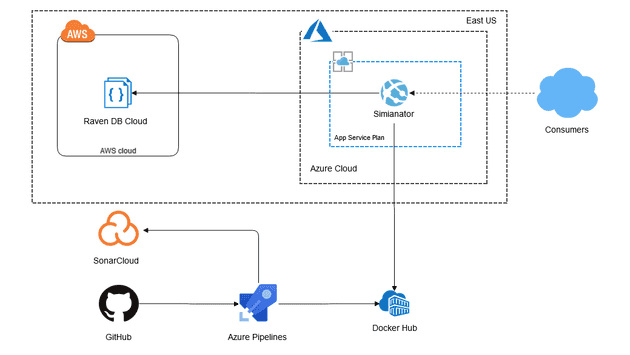
After an extremely challenging technical test, to which I dedicated myself a great deal (and felt proud to complete), which involved a scalable application for DNA processing, similar to the Voight-Kampff Test from Blade Runner, a PaaS (Platform as a Service) on Azure and a DBaaS (Database as a Service) of multi-instance master-master documents on AWS (Amazon Web Services), and an equally interesting technical interview, I got the news that I had been approved. There couldn't have been a better time for that to happen, and that would, up to that point, be the biggest turning point of my career.
We Don't Accept Rocks in Returns
It was June 2020 when I was hired as a Semi-Senior Software Engineer (also known as Mid-Level) by the e-commerce giant, which was growing double digits, quarter over quarter, driven by the demand surge during the lockdown period, which would last two years and only ease off after the first vaccines rolled out. At that point, the team had just been formed, so everyone on my team was still adjusting to the new routine and the projects.
What stands out to me is that the skills I had developed years before in orchestration systems would be needed again at that moment, since my first project at this company would once again be to build an orchestrator, but this time building it practically from scratch. That is, using a well-known open-source BPMN (Business Process Model and Notation) orchestration runtime, we built an abstraction over that engine and configurable flows so that logistics operators could apply quality rules during the process of receiving products returned by customers to the warehouses, preventing rocks and other improper objects from being accepted at the sorting stage.
Leveling Up Twice
After stabilizing the returns orchestrator, I moved through other teams responsible for different parts of the inbound inventory process at the warehouses, developing the WMS (Warehouse Management System). These were relatively small teams, of about 5 people, each one responsible for a set of the WMS's features. It's worth noting that the stack chosen by these teams commonly used React and Node.js-based frameworks for the frontend, and Spring Boot, combining the Kotlin and Java languages, for the backend. That was a pleasant surprise for me, since I hadn't expected Kotlin, built by JetBrains, to be so common outside mobile development. A lot of its syntax was certainly inspired by more modern languages, or ones that evolved more frequently (a C# flavor, so to speak), which made learning this stack even more interesting.
Around that same time, between 2021 and 2022, I also officially launched an independent consulting practice in software architecture, offering expert consulting services and partnering with technical leaders to guide them through the entire lifecycle of developing high-quality, performance-driven systems.
Back to my routine at the company, it's worth mentioning that it maintained its own development ecosystem, the IDP (Internal Developer Platform), providing standardized services, frameworks, and tools, abstracted away from vendor, for its thousands of development teams (that number would grow to more than 15,000 developers by 2024 [2]). Having that level of tooling available certainly helped a lot in keeping the focus on the solution being built, and less on more mundane problems like connecting or integrating A with B, or getting the language to work with this or that infrastructure service.
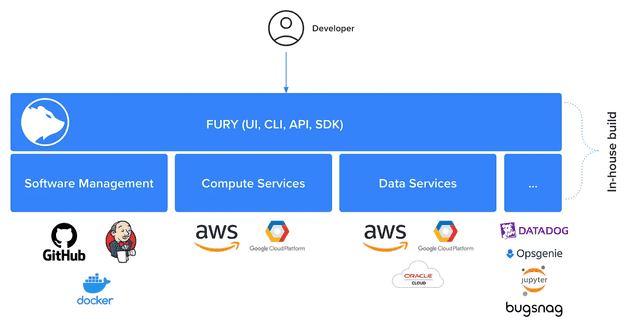
With the first WMS projects delivered, hitting the results my team expected and helping the newcomers (not just at the company, but also early in their careers) raise their technical level, I was promoted to Senior Software Engineer a year and a half after being hired. In the same period, I defended my master's thesis and closed out that chapter too. My gratitude to my advisor, the singular and thoughtful Prof. Dr. Nelson Brissac Peixoto.
But an even more important promotion was on its way: I was going to become a father. Those two events happening at once, the professional rise and the arrival of fatherhood, made that period one of the most challenging of my life.
With projects now more complex and critical, involving the work of thousands of logistics operators across dozens of warehouses and hundreds of thousands of products processed daily through the inbound flow, the responsibility over my architecture grew just as much, with the help of excellent programmers and technical leaders I was lucky enough to work with, on top of my own restlessness about raising the technical bar for the solutions and for the other teams as well.
I gave several presentations on all sorts of topics for my team and other developer teams, such as Unit Testing, Java Updates and News, Distributed Application Patterns, Orchestration with BPMN (something of a calling to spread the word of BPMN), among others. Day to day, I kept building out my repertoire and rolling out new tools, like data streaming services, new orchestrators based on state machines, and massive processing and categorization of tens of millions of products, which enabled new business processes to run. Also doing mentoring with junior developers, I lived through the peak of my career up to that point.
None of that ever had to do with being the best programmer (there were engineers as good as or better than me), but I was recognized for other skills and traits, the same ones described in the first management level in the post The Leadership Pipeline — The Path to the Tactical Level. In January 2023, I would be promoted to Tech Lead.
400 Days of Peace
New role, new responsibilities, new demands. At that point, my technical skills would serve as the foundation for new pillars of skills: time management, execution with excellence, and team development. The overall quality of the design and architecture of our applications improved a lot, since we started systematizing every kind of metric and gamifying technical debt, tying its resolution to the team's own quarterly goal.
Unfortunately, due to a combination of factors, problems came up at certain points, bringing me a very important reflection: presumption and overconfidence can be dangerous, even with the best of intentions, and that's why other safeguarding attitudes matter, like communication and risk-sharing, in order to avoid problems.
With that lesson learned, I revisited some teams I had passed through before, continuing to lend my contribution; and, together with my fellow leaders (special thanks to Vitão and Lu for the countless alignment meetings we had and for the jokes that would turn into catchphrases and project codenames), we developed a new working methodology for our needs, gathering metrics and evidence that let my team achieve excellent resilience results and maintain a protocol of near-zero incidents for 400 days straight, the "400 days of peace" that give this chapter its name.
It was 2025: Artificial Intelligence became more and more present in our daily work. By then, simply sending prompts to get answers, or using the autocomplete in tools like Cursor and Copilot, already felt dated. With the peak of the 4th generation of models from Anthropic and the 5th from OpenAI, and their respective coding harnesses, Claude and Codex, workflows became much more dynamic, relying on dozens of agents, skills, and plugins working in parallel, pulling data from various sources to plan, design, and code new features.
Not to mention the gains in activities like troubleshooting, automations and experiments, redesigns, refactoring, and much more! It feels like certain software gaps, left there out of carelessness, lack of knowledge, or even some time-to-market excuse, were no longer acceptable, precisely because polish had become accessible to everyone. In that sense, the way of working itself changed, moving from reviews and checks toward building guardrails and training focused on raising the team's awareness of best practices.
One Fury to Rule Them All
I had already been working on the logistics teams for more than 5 years, and once again felt like trying a new challenge, when, in the last quarter of 2025, a new development came up: I applied for an internal opening to be a tech lead on services for the company's IDP platform. The service in question: an application orchestrator (yet another one!) for designing business workflows, moving the responsibility for certain integration logic over to the service. I was accepted into the process and got my leadership's full support to move forward. Once again, I thank my colleagues for their support, especially my direct leader at the time, JP.
At first glance on the platform team, I thought I had moved to a different company altogether: different procedures, a different level of criticality and awareness about the projects, plus a history of backlog, technical debt, and loose screws to be tightened here and there.
Not to mention that, for the first time, I was also working on a multicultural team, with members across several countries, like Argentina, Colombia, and Uruguay, which, in the first few weeks, cost me an even bigger cognitive effort, since it was no longer just the technical context I needed to learn.
Still, I was very well received by everyone, by my team and by the leaders of sibling teams within the same management group. And it was remarkable, the level of quality and dedication everyone put into those applications, where the first and last goal was to serve the rest: the thousands of teams and developers and, potentially, the external customers who would be affected by that whole web of applications, bravely kept running by those people.
All things considered, that last year of my career was transformative in many ways: it taught me a lot and, now, aware of the risks my actions and decisions can cause, it also taught me to be more careful.
A New Beginning
This month, I'm leaving the company, where I spent the last 6 years and 4 months, coinciding with my fifteenth year of career. I'm leaving definitively as a different person: now a father, older, more experienced, and more aware of my place in the world. I leave it with a great deal of gratitude for everything I saw, lived, and overcame. I also have immense gratitude and respect for everyone who was with me during this time. There are dozens of people, some who left during this period, but it's especially to them that I dedicate this final part.
From now on, my journey takes a new direction, not just another chapter, but a whole new volume. And I'm ready, looking forward to the next 15 years!

And this is the close of this trilogy of memories, my first volume. Between moving cities, internships, college, dozens of different technologies, and a few shots that missed the mark before hitting it, these fifteen years brought me here. I don't know what comes next, but this story will certainly get a new volume.
I dedicate the close of this final part to the entire Inbound Shipping and Communication Services teams, for the inspiration, dedication, and companionship.
I dedicate this whole trilogy to my wife Victoria and my daughter Isabel.